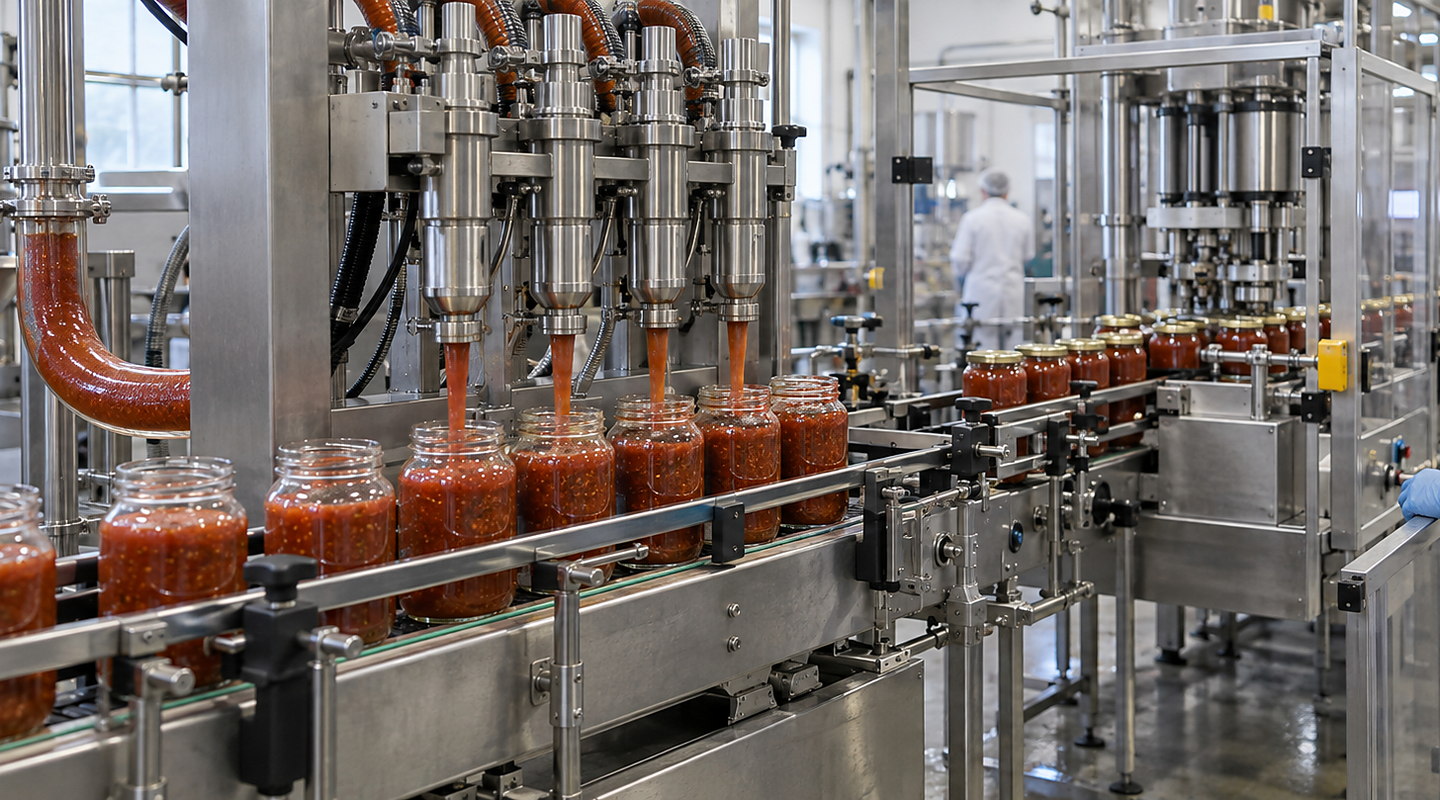
Select a nut-butter filler around texture and jar presentation
Choose nut butter filling machines by comparing your parts, process, rate, access, data needs and required results.
Choose nut butter filling machines by how well each option handles your real variation, line connections, safe access, maintenance and required results—not headline speed alone.
For routine production using viscous nut-butter filling, a short trial that reproduces the difficult condition is often more useful than a long list of nominal specifications.
Compare options in the conditions where they must work — Nut Butter Filling Machines
Plan nut butter filling machines around your product, pack range, target output, cleaning needs and finished-pack checks. Discuss a practical line concept with Lancing using representative samples. A useful shortlist should show how every option copes with viscous nut-butter filling product behaviour and cleaning, access and changeover method.
Discuss your application

Observe the product before, during and after the dose
At the feed vessel
Assess whether the product reaches the outlet consistently as the vessel empties. Look for a channel or cavity above the outlet while product remains around it. Record the actual product condition and any approved mixing or conditioning procedure; the dosing system should not be selected on the assumption that every nut butter flows alike.
Through the dosing path
Compare smooth and textured recipes separately. The largest inclusion must pass through the entire route, including valves and bends, rather than only the visible nozzle opening. Examine the finished product for changes in texture or distribution that would make a technically repeatable dose commercially unacceptable.
Into the jar
Use the smallest jar opening and the intended highest fill. Observe product release, nozzle withdrawal, rim condition and the presentation after settling. A clean result during a slow hand-held test may change when the jar indexes directly to the next station.
At a restart
Repeat observations after a normal pause and after replenishment. Record whether the first doses differ from stable production and which checks are required before accepted jars continue to closing.
Make the comparison answer a specific fault
- The dose becomes inconsistent: check hopper feed and full replenishment of the dosing unit before changing the quantity setting.
- Texture changes: compare the product before and after the complete passage and review the proposed handling method.
- Product trails across the rim: assess nozzle release and withdrawal together with jar movement.
- A new recipe shows carryover: inspect retention points and the agreed emptying and cleaning sequence.
Nut ingredients and recipe changes require a defined cleaning and cross-contact control process. Easy access or removable parts can help operation, but they are not proof that a cleaning procedure is effective. The responsible site team must define and verify its acceptance method.
Use the acceptance-testing resource to record product observations alongside dose results, and discuss the most difficult recipe and jar combination.
Pause before choosing when…
- Only perfect or hand-selected examples of routine production using viscous nut-butter filling are available.
- No one has defined how finished-pack checks and reject handling will be evaluated.
- The normal range for viscous nut-butter filling product behaviour is described only as “usually fine” but has not been bounded.
- Your operator, cleaning, maintenance or recovery access has not been considered.
- Quoted performance depends on another machine or data source that is not included.