Nut Butter Filling Machines: How the Process Works
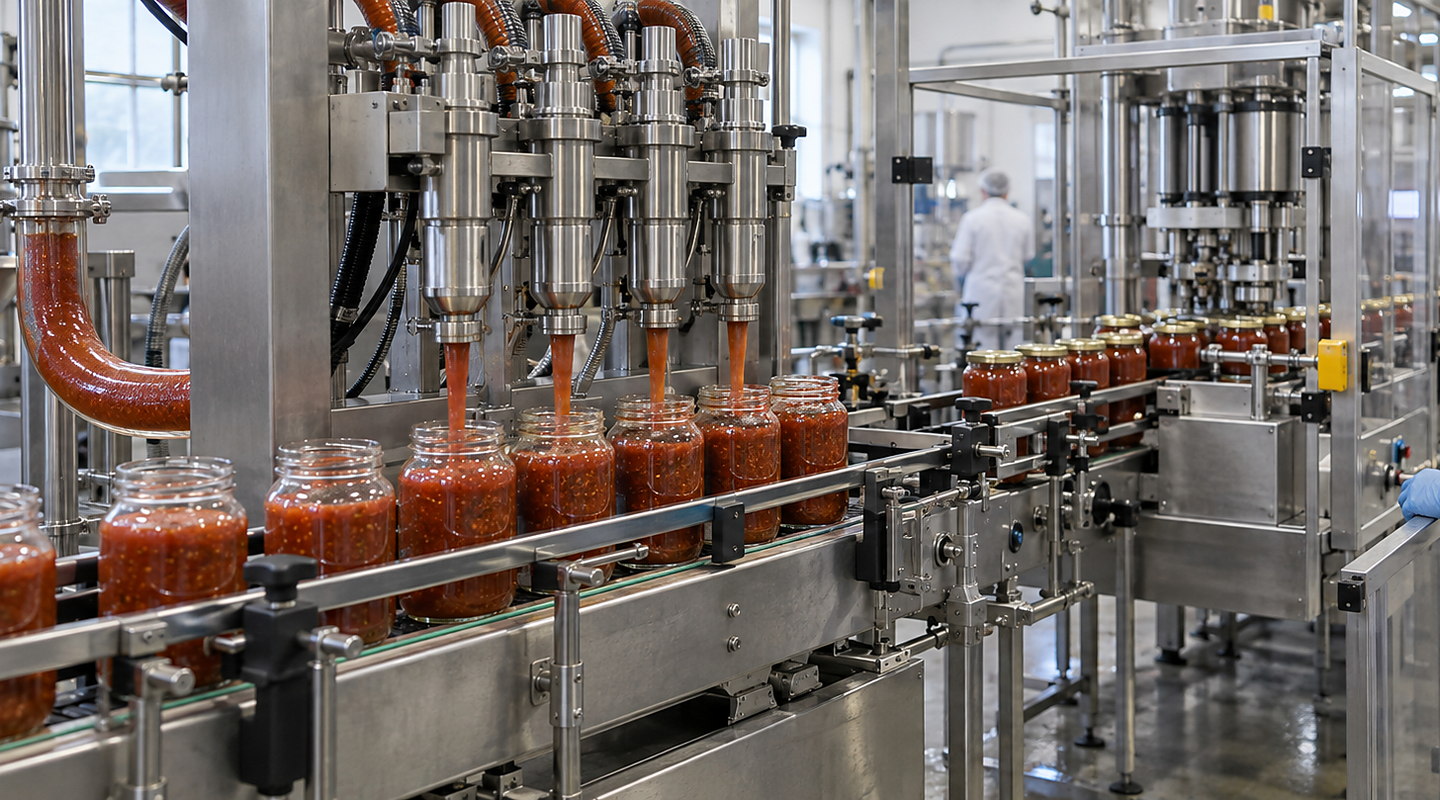
Plan nut-butter filling from representative recipes and jars through product feed, the complete dosing path, clean cut-off, restarts, changeover and accepted-pack checks.
Provide smooth and textured recipes, the filling-temperature range and actual jars/closures. Trial product supply and the complete dosing path with nozzle cut-off, checking quantity, retained texture and the jar rim after transfer towards closing. Include pauses, replenishment and product changes, with agreed cleaning and first-pack release requirements.
Use the recipe and jar trial brief with the acceptance records. Removable parts or easy access do not prove effective cleaning. The food business must define and validate its cleaning and allergen controls; no universal filling accuracy, output or recipe compatibility is assumed.
Understand the complete route from input to accepted output — Nut Butter Filling Machines
Plan nut butter filling machines around your product, pack range, target output, cleaning needs and finished-pack checks. Discuss a practical line concept with Lancing using representative samples. Follow the material or part through each operating step and include recovery, cleaning and change in the real cycle.
Discuss your application

Four clear stages for nut butter filling machines
At each stage, you can review how viscous nut-butter filling product behaviour and finished-pack checks and reject handling affect the next commitment.
- 01
Define recipes, product condition and accepted jars
Provide smooth and textured recipes with filling temperatures and standing/preparation conditions. Supply jar/closure samples, target quantities and the acceptable handling of pieces and texture.
- 02
Trial feed, dosing path and nozzle release
Describe the supplying vessel and transfer method. Trial the complete pump/piston, valve, hose and nozzle route using the demanding textured recipe and least forgiving jar opening; record feed, dose, product condition and cut-off.
- 03
Check transfer, pauses and replenishment
Inspect rim/neck/sealing areas after the jar leaves the filling position and moves towards closing. Repeat quantity and texture observations at start-up, after normal pauses and during replenishment, retaining any first-dose differences and agreed checks.
- 04
Demonstrate product change and retain acceptance records
List product-contact parts, residual product and products sharing the filler. Review emptying, dismantling, inspection and first-pack release under the food business's defined cleaning/allergen controls, retaining settings, results, remaining issues and responsibilities.
Decisions and results stay connected
| Stage | What happens | What you can review |
|---|---|---|
| Define recipes, product condition and accepted jars | Provide smooth and textured recipes with filling temperatures and standing/preparation conditions. Supply jar/closure samples, target quantities and the acceptable handling of pieces and texture. | Recipe/temperature/condition range, jars/closures, quantity and texture criteria. |
| Trial feed, dosing path and nozzle release | Describe the supplying vessel and transfer method. Trial the complete pump/piston, valve, hose and nozzle route using the demanding textured recipe and least forgiving jar opening; record feed, dose, product condition and cut-off. | Supply/path/settings records, representative dose results and nozzle/rim observations. |
| Check transfer, pauses and replenishment | Inspect rim/neck/sealing areas after the jar leaves the filling position and moves towards closing. Repeat quantity and texture observations at start-up, after normal pauses and during replenishment, retaining any first-dose differences and agreed checks. | Start/restart/replenishment results and jar condition after transfer to closing. |
| Demonstrate product change and retain acceptance records | List product-contact parts, residual product and products sharing the filler. Review emptying, dismantling, inspection and first-pack release under the food business's defined cleaning/allergen controls, retaining settings, results, remaining issues and responsibilities. | Product-change method, contact-part/cleaning boundary, reviewed first-pack and acceptance evidence. |
Keep connected responsibilities clear
Your final nut butter filling machines scope must also account for cleaning, access and changeover method, finished-pack checks and reject handling, current regulations and the conditions at your site.
- The selected method must be trialled with representative product and packaging.
- Supplier tolerances and product-condition changes can alter handling or fill behaviour.
- Equipment selection does not replace product, hygiene, packaging or regulatory validation.