Current condition
Record recipe texture, filling temperature, standing/preparation condition and the acceptable treatment of pieces. Identify the supplying vessel/transfer method, actual jars/closures and the target quantity and acceptance check.
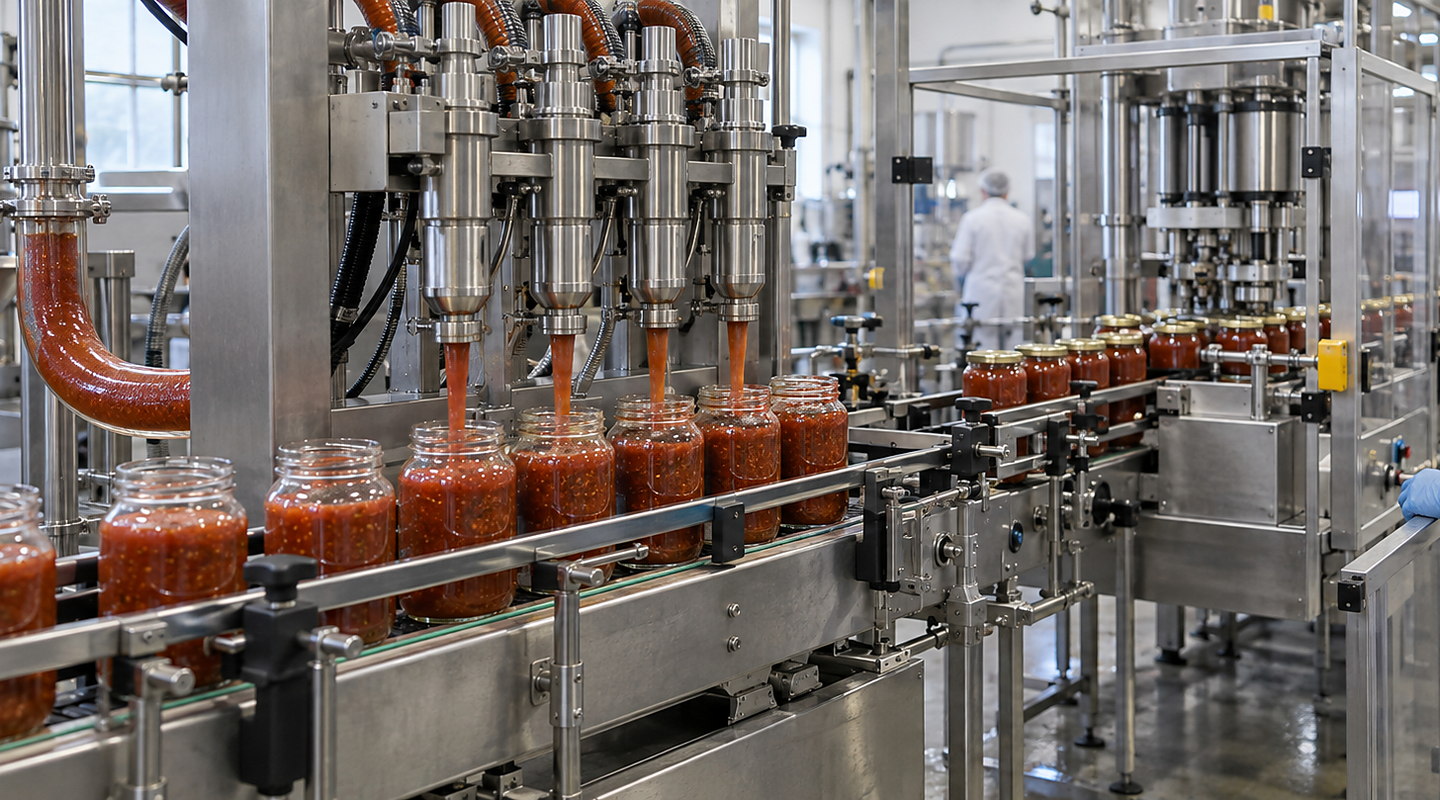
Define a nut-butter filling trial with recipe texture, filling temperature, standing condition, feed method, jar/closure samples and acceptable product handling.
Describe each recipe separately, including smooth/textured condition, filling temperature, behaviour after standing and acceptable handling of pieces and texture. Provide jars and closures, dose requirements and the product-supply method. Trial the demanding recipe and opening combination through the complete feed/dose/nozzle path.
Use the complete filling sequence with the acceptance records. Removable parts or easy access do not prove effective cleaning. The food business must define and validate its cleaning and allergen controls; no universal filling accuracy, output or recipe compatibility is assumed.
Plan nut butter filling machines around your product, pack range, target output, cleaning needs and finished-pack checks. Discuss a practical line concept with Lancing using representative samples. Use this guide to resolve viscous nut-butter filling product behaviour before it limits the final system.
Discuss your application

Record recipe texture, filling temperature, standing/preparation condition and the acceptable treatment of pieces. Identify the supplying vessel/transfer method, actual jars/closures and the target quantity and acceptance check.
Include smooth and demanding textured recipes, normal temperature variation, the least forgiving jar opening and intended high fill. Trial start-up, pauses, low product level and replenishment rather than relying only on stable mid-run doses.
Review feed, complete dosing path and cut-off together, checking quantity, texture and the rim after transfer to closing. Define product-change/contact-part/cleaning requirements, retained records and handling of unacceptable fills.
Keep observations separate for each smooth or textured recipe. Record filling temperature, preparation and standing condition so a feed or dose result remains tied to the product actually tested.
Pair the demanding recipe with the least forgiving intended jar opening. Observe nozzle release and the jar rim after movement towards the actual closure or seal.
Record the dose target, sample method and product condition. Compare quantity with retained texture; a repeatable amount alone does not establish an acceptable product result.
Compare stable feed with low level, replenishment and a normal pause. Record first-dose differences instead of assuming the middle of a run represents the complete cycle.
Map the product-contact path and residual product when recipes change. Access or removable parts do not prove cleaning effectiveness; retain the food business cleaning and allergen-control requirements.
Inspect pieces or texture and the rim, neck or sealing area alongside quantity. Retain recipe, settings and expected or observed results so product behaviour can be reviewed against the accepted pack.