Current condition
Record recipe texture, filling temperature, standing/preparation condition and the acceptable treatment of pieces. Identify the supplying vessel/transfer method, actual jars/closures and the target quantity and acceptance check.
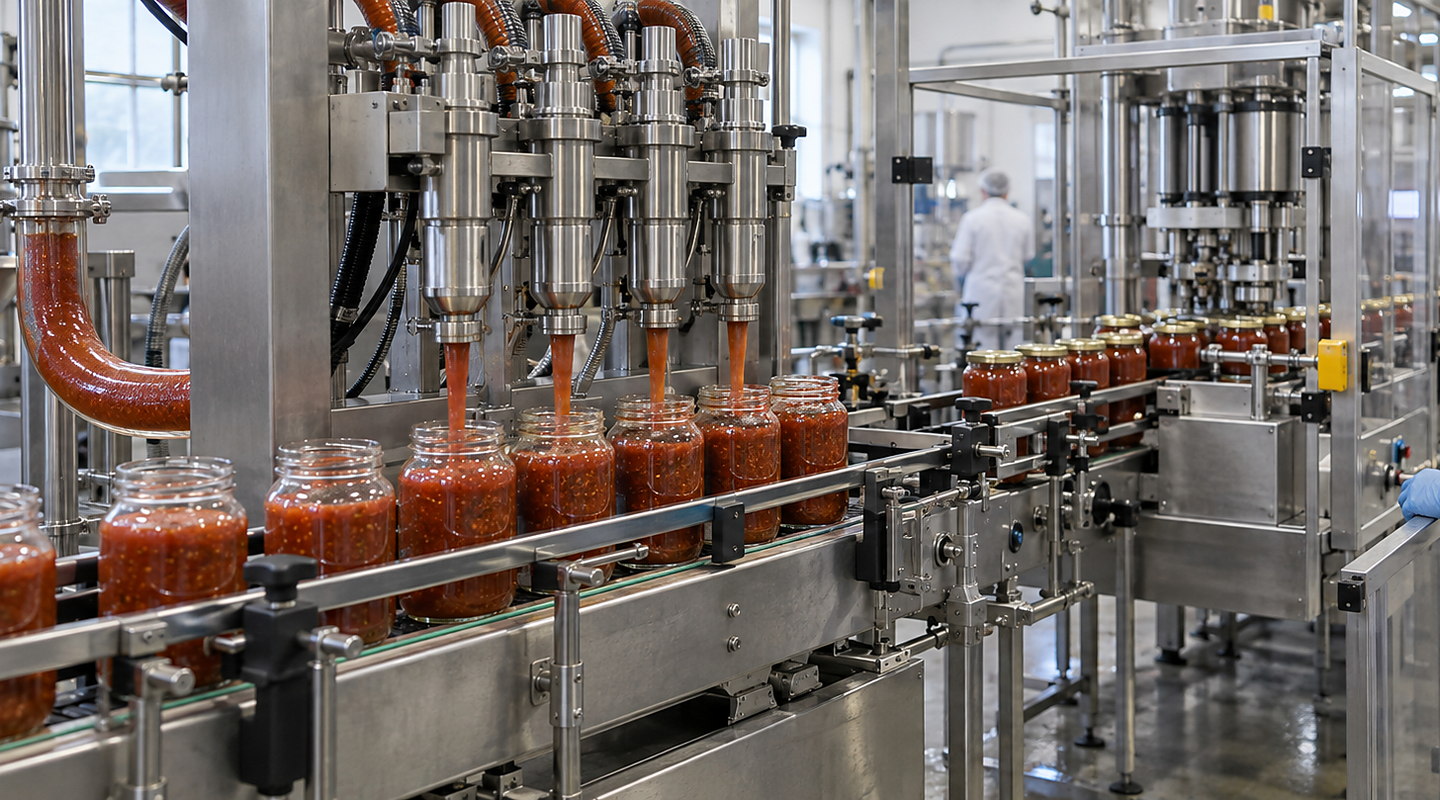
Agree nut-butter filling tests for dose, texture, rim cleanliness, jar transfer, pauses/replenishment and product changes, with cleaning responsibilities stated.
Agree quantity and sample checks, acceptable texture and a clean closing area before the trial. Record recipe condition, temperature, feed/dosing/nozzle settings and the jar/closure combination. Check start-up, pauses, replenishment and transfer to closing, then demonstrate the agreed product-change and cleaning method with responsible review.
Use the recipe and jar trial brief with the selection guide. Removable parts or easy access do not prove effective cleaning. The food business must define and validate its cleaning and allergen controls; no universal filling accuracy, output or recipe compatibility is assumed.
Plan nut butter filling machines around your product, pack range, target output, cleaning needs and finished-pack checks. Discuss a practical line concept with Lancing using representative samples. Use this guide to resolve finished-pack checks and reject handling before it limits the final system.
Discuss your application

Record recipe texture, filling temperature, standing/preparation condition and the acceptable treatment of pieces. Identify the supplying vessel/transfer method, actual jars/closures and the target quantity and acceptance check.
Include smooth and demanding textured recipes, normal temperature variation, the least forgiving jar opening and intended high fill. Trial start-up, pauses, low product level and replenishment rather than relying only on stable mid-run doses.
Review feed, complete dosing path and cut-off together, checking quantity, texture and the rim after transfer to closing. Define product-change/contact-part/cleaning requirements, retained records and handling of unacceptable fills.
Identify the actual recipe, filling temperature, standing condition and accepted texture for every test case. Retain these conditions with the result rather than reporting an unnamed product trial.
Record the tested jar and closure combination, including the demanding opening and high-fill case. Check the closing area after the jar leaves the filling position.
Agree the target quantity, sampling method and acceptable range before testing. Keep expected and observed results alongside product condition and texture observations.
Include start-up, stable running, normal pauses, low feed level and replenishment in the test record. Distinguish these cases instead of accepting only a mid-run result.
Demonstrate the agreed product-change method and record contact parts, residual product and first-pack checks. Cleaning and allergen validation remain the food business responsibility.
Record quantity, texture and rim or sealing-surface findings, remaining issues and the responsible review. State which tested conditions were accepted and which still need resolution.